
Early Speech, Language, and Communication Milestones
At Communicating Together Therapy & Wellness Associates, we are committed to using evidence-based practices to support the development of speech, language, and communication skills in our clients. As of October 2024, Speech-Language & Audiology Canada (SAC) recommends following the communication milestones established by the American Speech-Language-Hearing Association (ASHA), a respected authority in the field. These milestones serve as a valuable guide for parents, caregivers, and families to better understand typical speech, language, and communication development and identify potential concerns early on. By aligning with these recognized standards, we ensure that the strategies and interventions we provide are grounded in the latest, research-backed practices. To learn more, please explore the resources below:
👉 ASHA Communication Milestones
👉 “Is This Just a Phase?” When to Seek Speech-Language Support
Building Communication Through Connection
The images on this page highlight the power of positive interactions between children and their caregivers in fostering communication skills. Children learn best in environments where they feel safe, supported, and connected. Engaging with your child daily, whether during routine activities or playtime, is crucial for their communication growth.




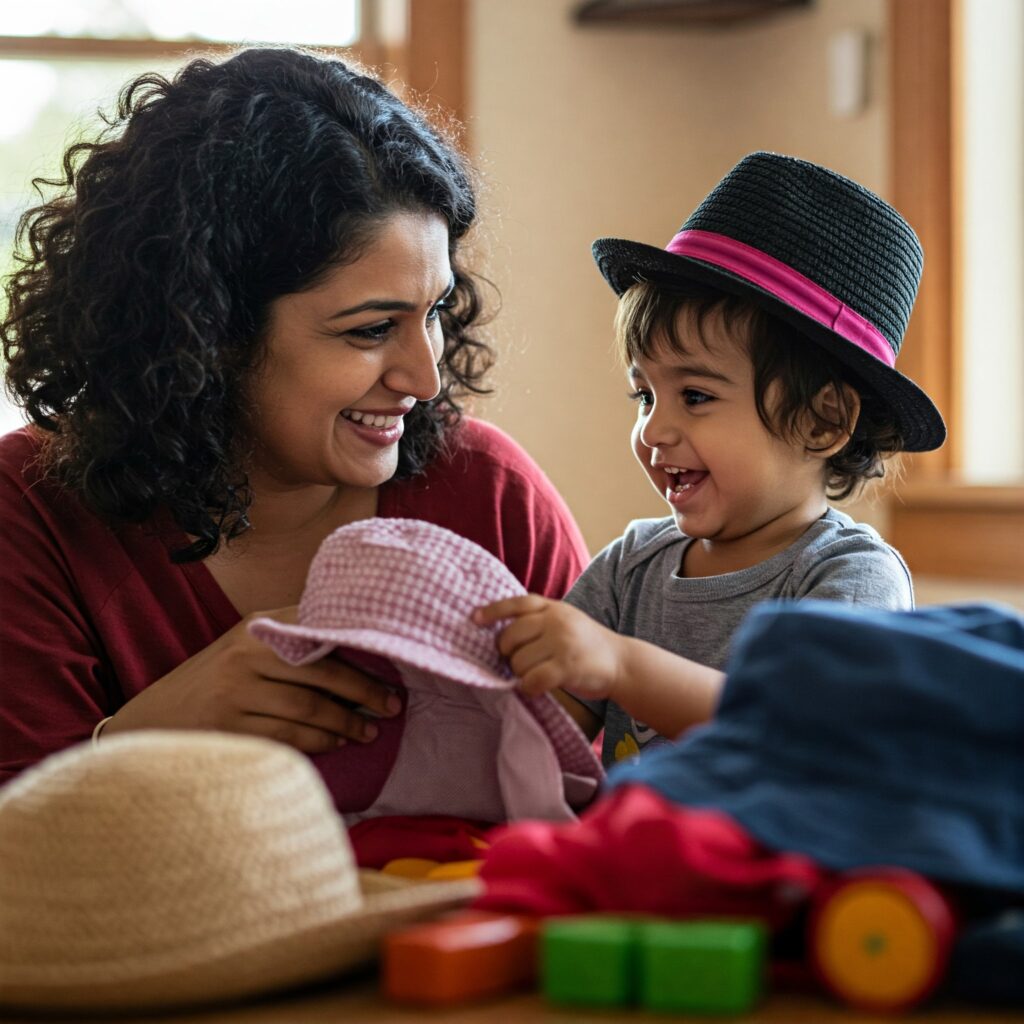
Here are some helpful tips for nurturing your child’s communication
- Talk with your child from birth. Even newborns respond to the sound of your voice.
- Use clear, grammatically correct language. Instead of “baby talk,” try phrases like “It’s my turn.”
- Follow your child’s lead. Talk about what interests them. Children learn best when they’re engaged and motivated.
- Expand on what your child says. If they say “car,” you might say, “Yes, that’s a big car!”
- Answer their questions patiently. Even seemingly simple questions are important for their learning.
- Read together and discuss the pictures. Books are a wonderful tool for language development.
- Sing songs and rhymes. Music and rhythm can enhance language learning.
- Play interactive games like peek-a-boo and I Spy. These games encourage communication and turn-taking.
- Use the language you’re most comfortable with. Children thrive when they hear fluent language from their caregivers.
- Most importantly, make it fun! Enjoy your time together.
Explore More Tips and Videos
For more ideas and encouragement, explore these blog posts by Rhonda MacKinnon (Speech-Language Pathologist & Owner of Communicating Together Therapy & Wellness Associates), each with a short, helpful video:
- Why Early Speech-Language Support Matters — If the “wait and see” approach doesn’t feel quite right, this guide explains why early support is so powerful. Learn how to trust your instincts and discover practical, neurodiversity-affirming ways to foster connection and confidence while your child’s brain is rapidly building its communication foundations.
- Why Hearing Matters for Your Child’s Communication — Hearing and speech are closely connected, yet subtle hearing changes can often go unnoticed. This article explores common signs to look for, how to navigate support options in Ontario, and practical ways to support your child’s listening and connection during everyday routines.
- Choosing a Speech-Language Pathologist for Your Child: Finding the Right Fit — Finding the right support is a personal journey. This guide helps you navigate the process of choosing a clinician by prioritizing your child’s comfort, safety, and unique communication style. Discover key questions to ask and why a therapeutic relationship built on trust is the most important foundation for progress.
- The Best “Toys” for Your Child’s Speech & Language Development (They’re Not What You Think!) — Discover why the most valuable “toys” are often simple, everyday items and playful moments you share together—no batteries required.
- Your Role in Speech Therapy Is More Powerful Than You May Think — Learn how simple, everyday moments at home can strengthen your child and teen’s communication skills and boost their progress beyond the therapy room.
- Things You Won’t Hear in Speech Therapy: Here’s Why — Learn why low-pressure, connection-focused communication helps children build confidence and develop language in natural, supported ways. This article offers gentle, practical strategies you can use at home to encourage communication—without any pressure or performance expectations.
- After School Meltdowns: Communication Strategies to Support Your Child’s Regulation — Understand why meltdowns happen (it’s not misbehaviour!) and learn practical, gentle communication strategies to support your child’s emotional regulation and transitions after a demanding day.
- How Children Build Communication Skills Through Connection — Discover why warm, responsive relationships are more powerful than flashcards or apps. This article introduces the “Serve and Return” framework and offers practical, pressure-free ways to support your child’s language development during your everyday routines.
Remember, every interaction is a valuable opportunity to support your child’s communication development and strengthen your bond.